

Cart


Cayan cat bunk

X

X

Your cart is currently empty.
You may also like:

Total
29.99
.svg)
How to Keep Indoor Cats Active (And Why It Matters)
Indoor cats need more stimulation than we think. Here’s how to keep your cat active, healthy, and happy — even in a small apartment.

How to Keep Indoor Cats Active (And Why It Matters)
Introduction
Most domestic cats live almost entirely indoors. While indoor life protects them from traffic, predators, and harsh weather, it also removes the natural outlets that keep cats physically and mentally healthy. Without opportunities to climb, jump, explore, and “hunt,” many indoor cats become bored, sluggish, or even overweight.
The good news: it does not take much to transform your home into a stimulating environment. With the right setup, even a small apartment can support your cat’s instinct to move, play, and stay fit every day.
This guide explains why activity matters, how much your cat needs, and simple ways to keep your indoor cat engaged and healthy.
1. Why Indoor Cats Need Extra Activity
Indoor life limits natural behavior
Outside, cats roam, jump, stalk, climb, and explore constantly. Indoors, their world becomes smaller. Even with love and care, indoor life can reduce:
- exploring
- climbing
- hunting
- jumping
- problem-solving
Without these outlets, cats may develop:
- boredom
- frustration
- destructive behavior
- excessive sleeping
- weight gain
Health risks of low activity
Low daily movement can lead to:
- overweight and obesity
- reduced muscle tone
- joint stiffness
- stress and anxiety
- lower confidence (especially in multi-cat homes)
Daily enrichment is not optional. It is essential for your cat’s well-being.
2. How Much Activity Is Enough?
Every cat is different, but most indoor cats thrive with:
20–30 minutes of total daily activity, split into:
- 2–3 short play sessions (5–15 minutes each)
- light climbing or exploring throughout the day
- mental enrichment (puzzles or window watching)
Younger cats may need more frequent short bursts, while older cats benefit from gentle, predictable routines.
Consistency matters more than length.
3. Ways to Keep Indoor Cats Active (Even in Small Spaces)
You do not need a large home. These simple strategies support the natural instincts of an indoor cat — climbing, exploring, and “hunting.”
3.1 Interactive Play Sessions
Keep it short and dynamic. Use toys that mimic prey:
- wand toys
- feather teasers
- laser pointers
- bounce toys
- small mice or balls
Rotate toys every few days so they stay exciting.
3.2 Provide Vertical Climbing Space
Vertical territory is one of the most important forms of enrichment.
Climbing helps cats:
- stay physically active
- build muscle
- feel secure and confident
- satisfy their natural instinct to perch high
- observe their surroundings
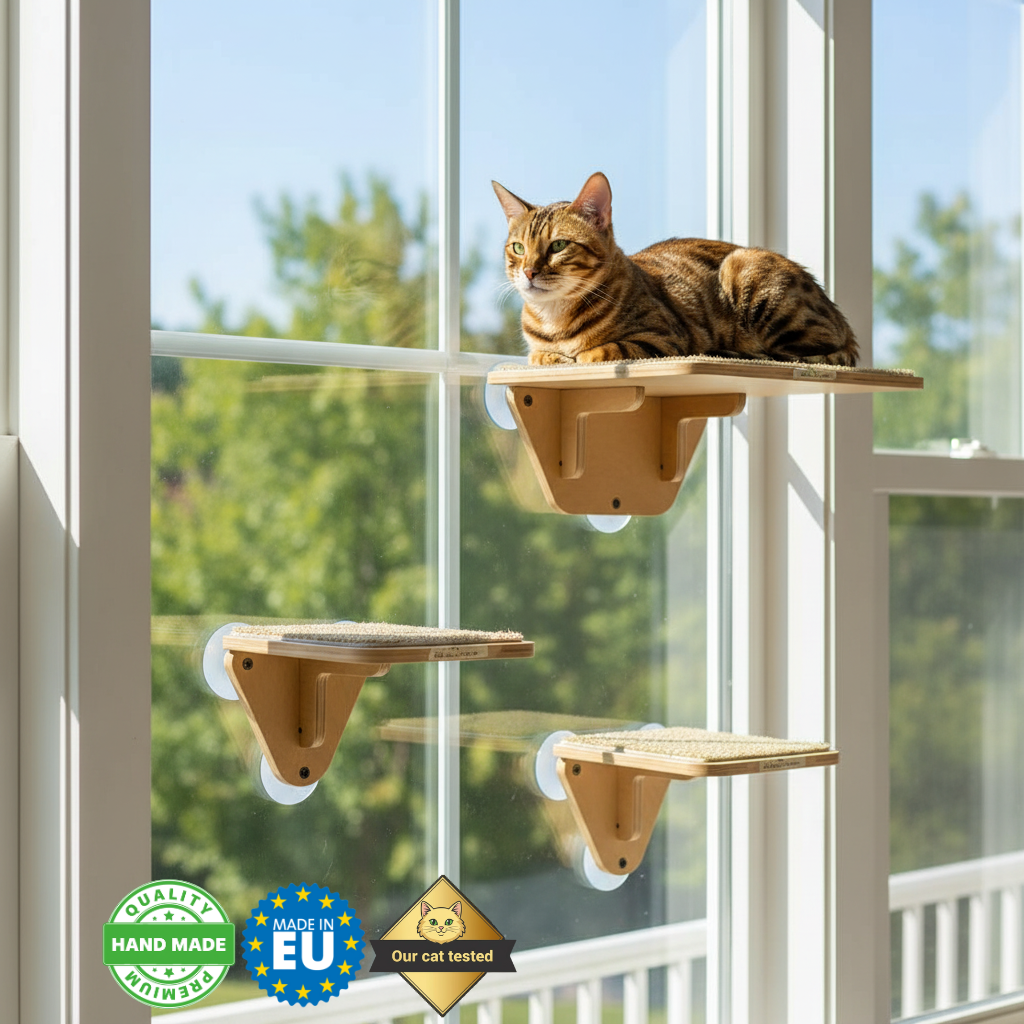
This is where window-mounted shelves or staggered climbing steps become incredibly valuable — especially for apartments where floor space is limited.
3.3 Use Puzzle Feeders and Treat Games
Instead of serving food in a simple bowl, puzzle feeders:
- activate problem-solving
- slow down eating
- encourage light movement
- reduce boredom
Even inexpensive treat-dispensing toys make a big difference.
3.4 Offer Safe Exploration Zones
Cats love novelty. Add:
- boxes
- tunnels
- paper bags
- window perches
- rotating play zones
Switching their environment every few days keeps things interesting.
3.5 Build a Consistent Daily Routine
Cats thrive on predictable patterns.
Try:
- morning play
- afternoon rest
- late evening play
- consistent feeding
- dedicated “window time”
A routine reduces stress and helps regulate energy.
4. Why Vertical Space Makes the Biggest Difference
Climbing is one of the easiest and healthiest ways for indoor cats to exercise.
Benefits of vertical space:
- uses natural instincts
- strengthens joints & muscles
- reduces stress
- creates a sense of territory
- encourages daily activity
- improves mental stimulation
- reduces conflicts in multi-cat homes
Window-mounted shelves are especially powerful because they combine:
- climbing
- perching
- exploring
- watching outdoor movement
- a high, safe resting spot
This turns a simple window into a daily enrichment station.
5. A Simple Weekly Activity Plan
Monday:
• Morning wand toy
• Evening climbing session
• Treat puzzle
Tuesday:
• Laser play
• Window perch time
Wednesday:
• Climbing + treat game
• Hide-and-seek toy rotation
Thursday:
• Interactive wand toy
• Free climbing session
Friday:
• Puzzle feeder
• High-perch relaxation
Weekend:
• Longer play sessions or gentle exploration
• Rotate climbing setups or window spots
Even small, consistent efforts create lasting benefits.
6. Common Mistakes to Avoid
• Mistake: Only using floor-level toys
What happens: Cats get bored quickly
Better approach: Add vertical options like shelves, steps, or perches to satisfy climbing instincts.
• Mistake: Long, rare play sessions
What happens: Cats lose interest and may become overstimulated
Better approach: Use short, frequent play bursts (5–15 minutes), 2–3 times a day.
• Mistake: Keeping the same toys available all the time
What happens: Predictability reduces excitement
Better approach: Rotate toys weekly so each feels “new” again.
• Mistake: No mental stimulation
What happens: Cats become restless or destructive
Better approach: Add puzzle feeders, hide-and-seek treats, and visual enrichment like window perches.
• Mistake: No climbing opportunities
What happens: Less exercise and reduced confidence
Better approach: Provide vertical space—shelves, window steps, or a climbing path.
Final Thoughts
Indoor life can be safe, cozy, and enriching — but only if you give your cat opportunities to move, climb, and explore.
With short daily play sessions and the right vertical space, you create a healthier, happier environment that fits naturally into any home, especially small apartments.
Whether through wand toys, puzzle feeders, or simple window-mounted steps, helping your cat stay active is one of the best ways to support their well-being.
A happier cat lives in motion — and even the smallest home can become a vertical world waiting to be explored.